Standing on Top of Mount Everest in 360°
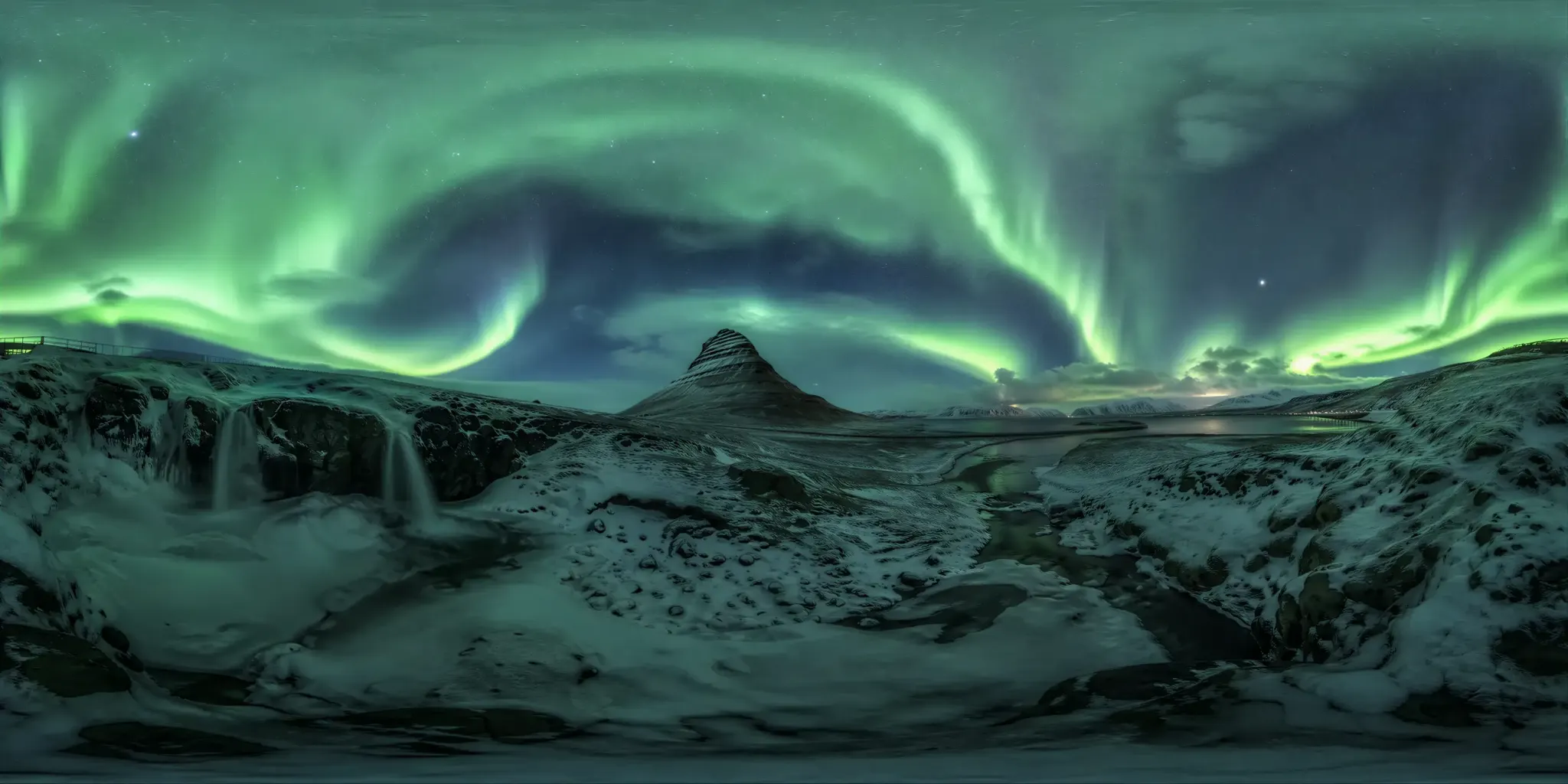
Roughly 6,000 people have ever stood on the summit of Mount Everest. The rest of us know it only from documentaries and a handful of photographs taken by climbers who had seconds to spare before turning back down. At 8,849 metres, it is the closest you can stand to the edge of space while still on solid ground.
So what does it actually look like up there — in every direction? Here's the view from the top of the world, and how to step into it yourself.
The view from 8,849 metres
From the summit, you're above almost everything. The curve of the horizon is visible. The sky overhead deepens toward black-blue because there's so little atmosphere left above you. Below, the Himalayas spread out in every direction — a sea of snow-capped peaks poking through cloud, with the great ridgelines of Lhotse and Nuptse falling away beneath your feet.
A flat summit photo flattens all of that. A 360° scene restores it: tilt up into the thin, dark sky, look down at the prayer flags and the snow, then turn slowly to watch the entire mountain range sweep past you.
Beam to the summit — no oxygen required
BeamTo generates a complete, photoreal 360° world from a single sentence, right on your iPhone. You explore it by dragging or moving your phone. It's the safest possible way to reach the top of Everest: no months of acclimatization, no death zone, no cost beyond a free download.
Once you're there, try changing the conditions you'd never survive in real life:
- Whiteout: "On the Everest summit ridge in a blizzard, blowing snow, fixed rope disappearing into white."
- Golden light: "Everest summit at golden hour, long shadows across the Himalayas, alpenglow on the peaks."
- Base camp: "Everest Base Camp at dawn, colorful tents on the glacier, the Khumbu Icefall ahead."
Places photos can't take you
This is where generating a place beats finding a photo of one. There simply isn't a good 360° library for the Everest summit — it's too remote, too dangerous, too brief a visit. But you can describe it, and stand in a faithful version of it in seconds. The same is true for the deep ocean, an erupting volcano, or the surface of Mars: the prompt is the only equipment you need.
Reach the top of the world
Type the place, tap go, and look around in full 360°. Free to download on iOS.